Yule: Celebrating the Return of Light
Yule is an ancient winter solstice festival rooted in pre-Christian Germanic and Norse traditions, observed around the longest night of the year, near December 21 in the Northern Hemisphere. Astronomically, it marks the Winter Solstice, the moment when the sun reaches its lowest point in the sky, and daylight begins its gradual return. Symbolically, Yule represents rebirth, renewal, and the quiet triumph of light over darkness, a theme that has resonated across human cultures for thousands of years.
History of Yule
Ancient Roots of the Solstice
Long before written history, human societies tracked the sun’s movements with remarkable precision. Archaeological monuments such as Stonehenge in England and Newgrange in Ireland are deliberately aligned with the winter solstice sunrise, indicating that this moment held profound cosmological and ritual significance more than five thousand years ago. These structures suggest that ancient peoples understood the solstice as a liminal threshold, a symbolic death and rebirth of the sun, long before the emergence of organized religions.
Yule is part of a broader, cross-cultural reverence for the Winter Solstice. Roman Saturnalia, Persian Yalda Night, and ancient Egyptian solar myths all emphasize themes of rebirth, cosmic balance, and the return of light. This widespread symbolism supports a shared human response to seasonal darkness: hope rooted in astronomical certainty and cyclical time.
Yule in Germanic and Norse Tradition
The ancient Germanic calendar was divided into six periods of 60 days called tides. Yuletide corresponds to modern December and January.
The word Yule derives from Old English ġēol (or ġēohol) and Old Norse jól (júl), both referring to a pre-Christian midwinter festival associated with the winter solstice. Linguistically, these terms trace back to a Proto-Germanic root (*jehwlą / *jōlan), which scholars associate with sacred time, seasonal turning, and ritual feasting. While some folk etymologies connect Yule to celebratory language—such as the Dutch joelen, meaning loud or exuberant revelry—these interpretations are considered secondary echoes rather than primary origins. Together, the linguistic evidence suggests Yule marked not a single day, but an extended sacred season centered on communal survival, renewal, and the sun’s gradual return.
Yule was a communal observance centered on feasting, ritual drinking, storytelling, oath-making, and honoring ancestors and deities such as Odin and Freyr. These gods were associated with wisdom, fertility, protection, prosperity, and the returning sun. Through these rituals, communities reinforced social bonds while seeking spiritual favor for the coming year.
The Transformation of Yule
As Christianity spread across Northern Europe between the fourth and twelfth centuries, many Yule customs were absorbed into Christmas celebrations rather than eliminated. The Church adopted this extended festive period rather than eliminating it. The twelve-day structure allowed Christian theology, particularly the Nativity and Epiphany, to coexist with older seasonal customs. Over time, the Yule log, a central symbol of Yule, was incorporated into Christmas traditions to symbolize warmth, protection, and the return of light. Traditionally, a large log would be burned over the Twelve Days of Christmas, marking continuity from Yule to Christmas. Similarly, the practice of decorating with evergreens like holly and ivy became an enduring feature of Christmas, symbolizing resilience and eternal life. Gift-giving and communal meals during Yule, seen as ways to strengthen community bonds, continued alongside religious observances. The placement of Christmas near the solstice reflects continuity of solar reverence rather than a complete cultural rupture. Certain Pagan attributes of the holiday, such as wearing masks, that were outlawed in some places, became New Year's traditions through clever means of avoiding persecution and criminalization.
Yule for the Modern Pagan and Witch
The Wheel of the Year
In many modern Pagan and witchcraft traditions rooted in agricultural wisdom, the seasons are organized through the Wheel of the Year—a cyclical calendar of eight festivals, or sabbats, that mark solar events and agricultural turning points. These include the solstices and equinoxes (Yule, Ostara, Litha, and Mabon), as well as the cross-quarter days (Imbolc, Beltane, Lughnasadh, and Samhain). Together, they narrate a symbolic story of birth, growth, harvest, death, and renewal, reflecting humanity’s long relationship with land, sun, and survival.
Within many traditions, this cycle is personified through the relationship between the Goddess, who embodies the Earth, fertility, and the changing seasons, and the God, often associated with the sun, vegetation, and life force. The God is born at Yule, matures and strengthens through spring and summer, sacrifices himself at harvest, and dies at Samhain, while the Goddess shifts through phases of Maiden, Mother, and Crone. Together, the sabbats and the divine feminine and masculine express the sacred balance of nature and the continual cycle of transformation.
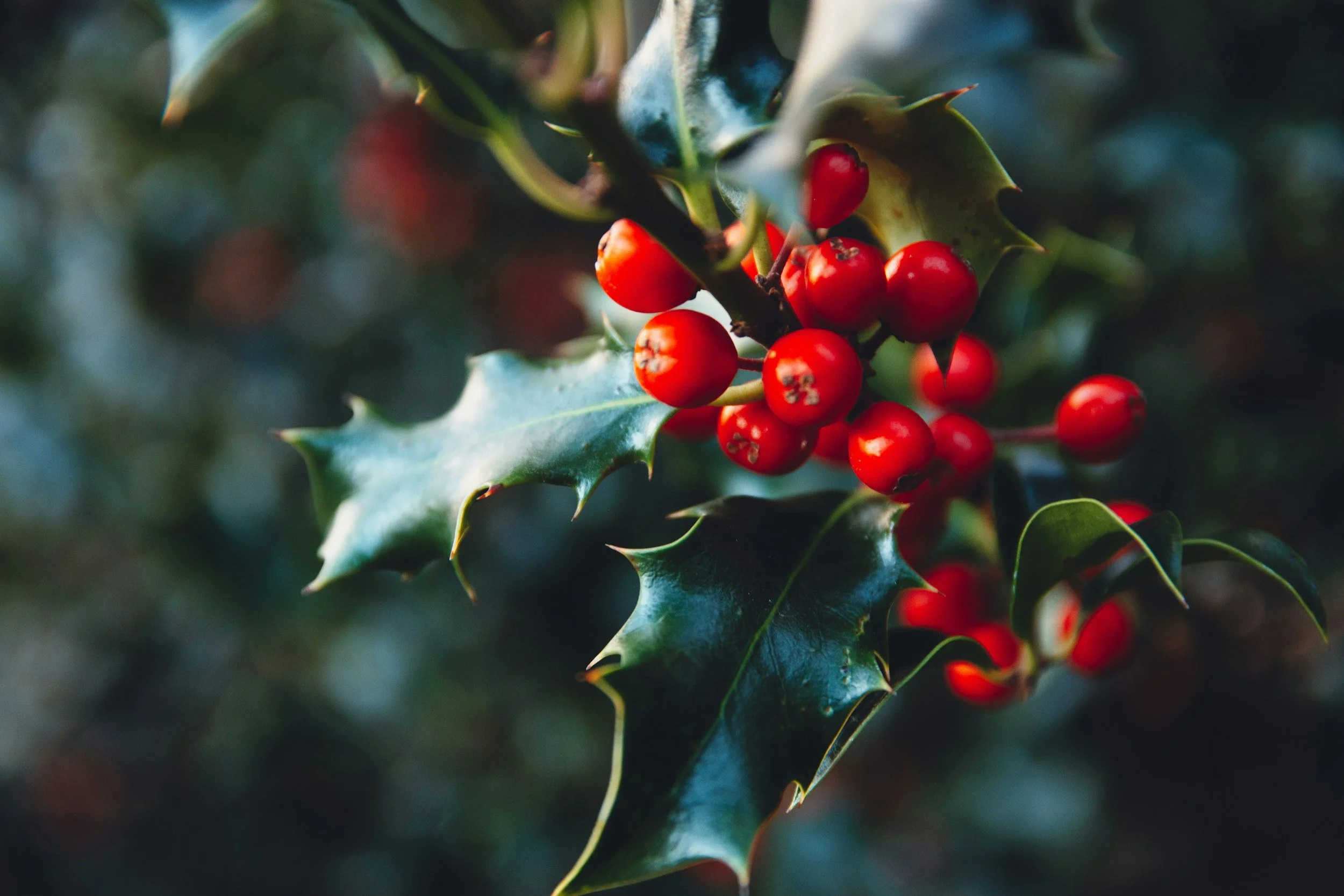
Within the Wheel of the Year, Yule marks the Winter Solstice, the point of deepest darkness and the rebirth of the sun. It follows Samhain, the sabbat of death and release, and serves as the quiet foundation from which all future growth unfolds. Mythically associated with the transition between the Holly King and the Oak King, Yule symbolizes the subtle shift from dormancy toward renewal, even as winter still reigns.
To embody this transition, reflect on how your own energy and intentions might shift from introspection to gradual action. Consider this question: Which aspects of your life, like the Oak, are ready to awaken and grow during this season? As a simple meditation, imagine the warmth of the returning sun nurturing your intentions, encouraging them to take root and flourish.
Modern Pagan Revival
In the twentieth century, modern Pagan, Wiccan, and Heathen traditions consciously revived Yule as part of reconstructed ritual calendars. Contemporary observances blend historical scholarship with intuitive spirituality, emphasizing nature’s cycles, intentional rest, shadow work, and long-term intention setting. Yule reminds practitioners that transformation does not require immediacy; growth often begins invisibly, beneath the surface.
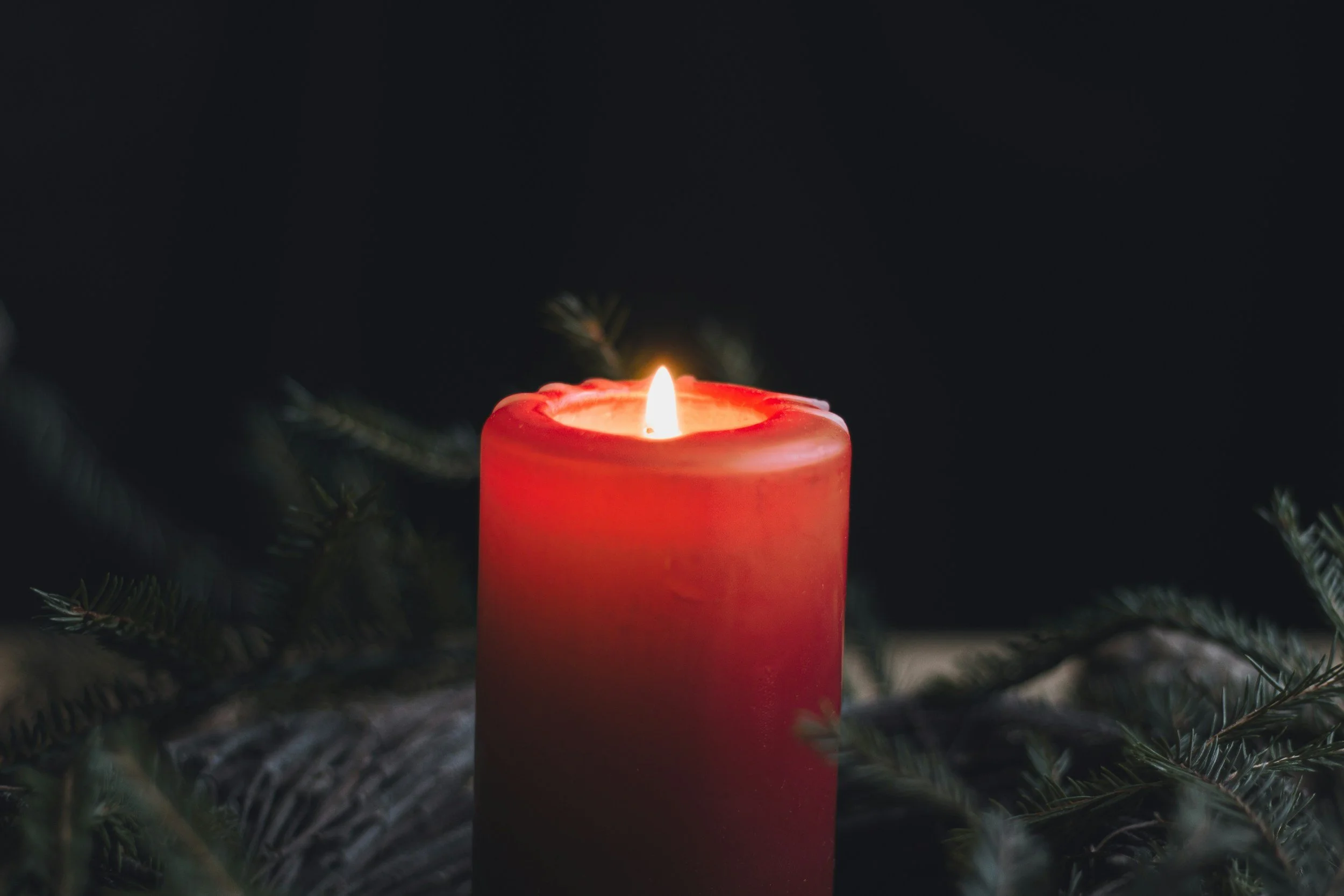
Historical Yule celebrations lasted more than a single night, and ancient Germanic and Norse communities often observed Jól over multiple nights, with feasting and ritual gatherings. In contemporary Pagan practice, Yule rituals include lighting candles or a Yule log to honor the returning sun, adorning altars with evergreens and mistletoe, and engaging in reflection and intention-setting. Heathens, focusing on Norse/Germanic traditions, may draw on Viking-era feasts and toasts, emphasizing community and ancestor honoring. In contrast, Wiccans or witches often focus on the solar rebirth of the God and personal renewal, incorporating magic and spells for transformation, illustrating how this sabbat continues to evolve while retaining its core focus on the return of light. Eclectic and solitary practitioners might incorporate traditions rooted in their unique heritage and cultural connections.
Get the Yule “Return of the Light” Tarot spread and journaling prompts on Substack.
Inner Alchemy and the Return of Light
Spiritually, Yule is both an outer and inner event. As daylight slowly increases, practitioners are invited to rest without guilt, reflect without fear, and plant intentions without pressure. Yule teaches that darkness is not a failure but a period of gestation- a necessary phase in all cycles of becoming. Stillness is a womb, and every ending is also a beginning in accordance with the cyclical nature of life.
Just as the sun turns back toward the Earth, so too do we gently turn toward hope, warmth, and renewal, trusting that growth often begins invisibly beneath the surface. In this way, Yule stands as one of humanity’s oldest sacred observances—a meeting point of astronomy, ritual, community, and spirit. It reminds us that time is cyclical rather than linear, that rest is as sacred as action, and that even in the deepest night, light is already on its way..
Yule’s Symbolism
Fire, Hearth, and the Yule Log
One of the most enduring symbols of Yule is the Yule log, representing continuity, protection, and the rebirth of solar light. While some later theories associate the word Yule with the yew tree, linguistic evidence favors a broader seasonal origin rather than a single botanical source. Historically, a large log was brought into the home and burned slowly over the Twelve Days of Christmas, with embers from a communal source preserved to kindle the following year’s fire in each individual home—an act symbolizing communal endurance, ancestral protection, and the unbroken cycle of light returning from darkness.
The flames and sparks were thought to entice the sun’s return, a ritual of light emerging from darkness that resonates with Yule’s spiritual core. Even the ashes had symbolic value, believed to help gardens and fields in the coming year, linking seasonal ritual to agricultural hope. Over time, as fireplaces shrank and urban life reduced fire use, the ceremonial log gave rise to alternative expressions, including the decorative mantel log and the Yule log cake (“Bûche de Noël”), combining ritual resonance with festive celebration.
Evergreens and the Magic of Endurance
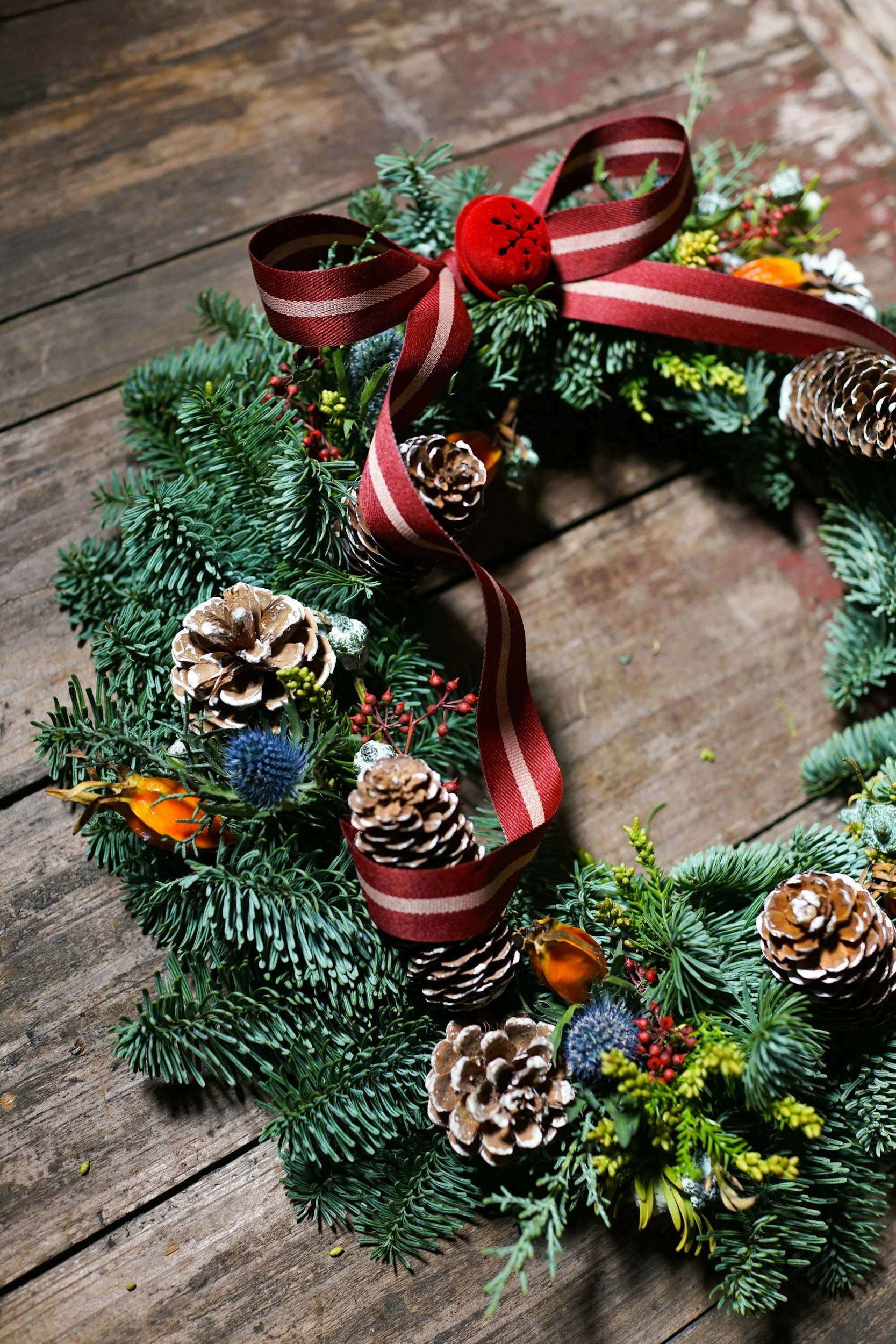
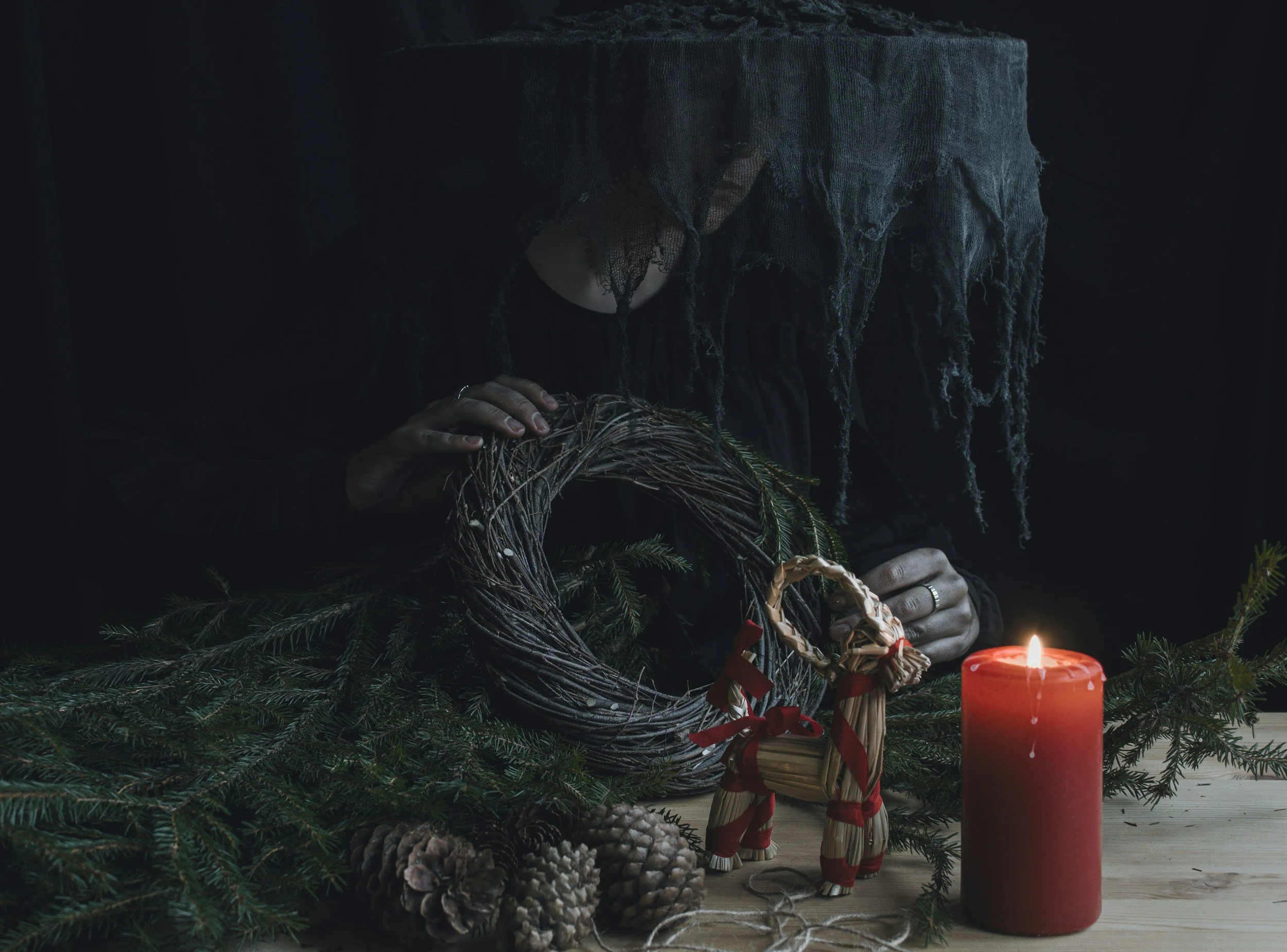
Evergreen plants such as pine, holly, ivy, and fir have long been associated with Yule. While deciduous trees appeared lifeless, evergreens remained vibrant, embodying endurance, immortality, and the persistence of life through hardship. Bringing these plants indoors served both symbolic and magical purposes, functioning as a living charm for health, protection, and resilience. Modern wreaths and trees preserve this ancient botanical symbolism.
A Norse myth connects mistletoe to Frigg and Balder, tying Yule symbols to themes of death and rebirth. The tradition of kissing under mistletoe may arise from Frigg’s story of mourning and restoration.
Feasting as Sacred Reciprocity
Yule feasting was never merely celebratory; it functioned as a form of sacred reciprocity. Sharing stored food and drink, often ale or mead, strengthened communal bonds while honoring both deities and ancestors. These ritual meals were believed to secure prosperity, fertility, and protection in the year ahead. In some traditions, food was left on the table overnight as an offering to the dead, a practice that later evolved into the Norwegian julebord feast and Christmas morning koldtbord, highlighting Yule’s deep connection to ancestor veneration. In today's context, this spirit of reciprocity can be reflected in organizing community potlucks or participating in food bank drives. These modern communal acts reflect the ancient tradition by fostering community ties and supporting those in need, channeling the essence of Yule feasting into actionable inspiration for collective well-being. Even leaving out cookies and milk for Santa’s arrival is representative of the harmony between giving and receiving- offerings and blessings.
Before the arrival of Christianity in Scandinavia, brewing juløl (Yule ale) was considered a sacred obligation. Farmers were expected to brew and bless the ale by the solstice, believing it fostered connection with spirits and shaped luck for the coming year. In this way, Yule feasts expressed gratitude for what had been preserved through the dark months and trust in the sun’s return and future abundance.
Gift-giving and folk symbolism were also woven into these traditions. In Norse lore, the Julbok, a gift-bringing figure associated with Thor’s goat, played a role in midwinter celebrations; today, straw goats remain a common Scandinavian Yule decoration, preserving this ancient custom. Similarly, hiding an almond in Julebrod (rice porridge) to predict marriage, or leaving a bowl of porridge for the tomten or nissen (protective household spirits) and farm animals, reflects how folk magic and belief permeated seasonal feasts.
Offerings extended beyond the household as well. The finest sheaf of autumn wheat, known as the julenek, was tied and left for birds, a gesture believed to invite peace and blessings during Yule. This practice, still observed in parts of Scandinavia, underscores how Yule feasting extended to the land itself, reinforcing a worldview rooted in reciprocity, care, and communal survival through winter.
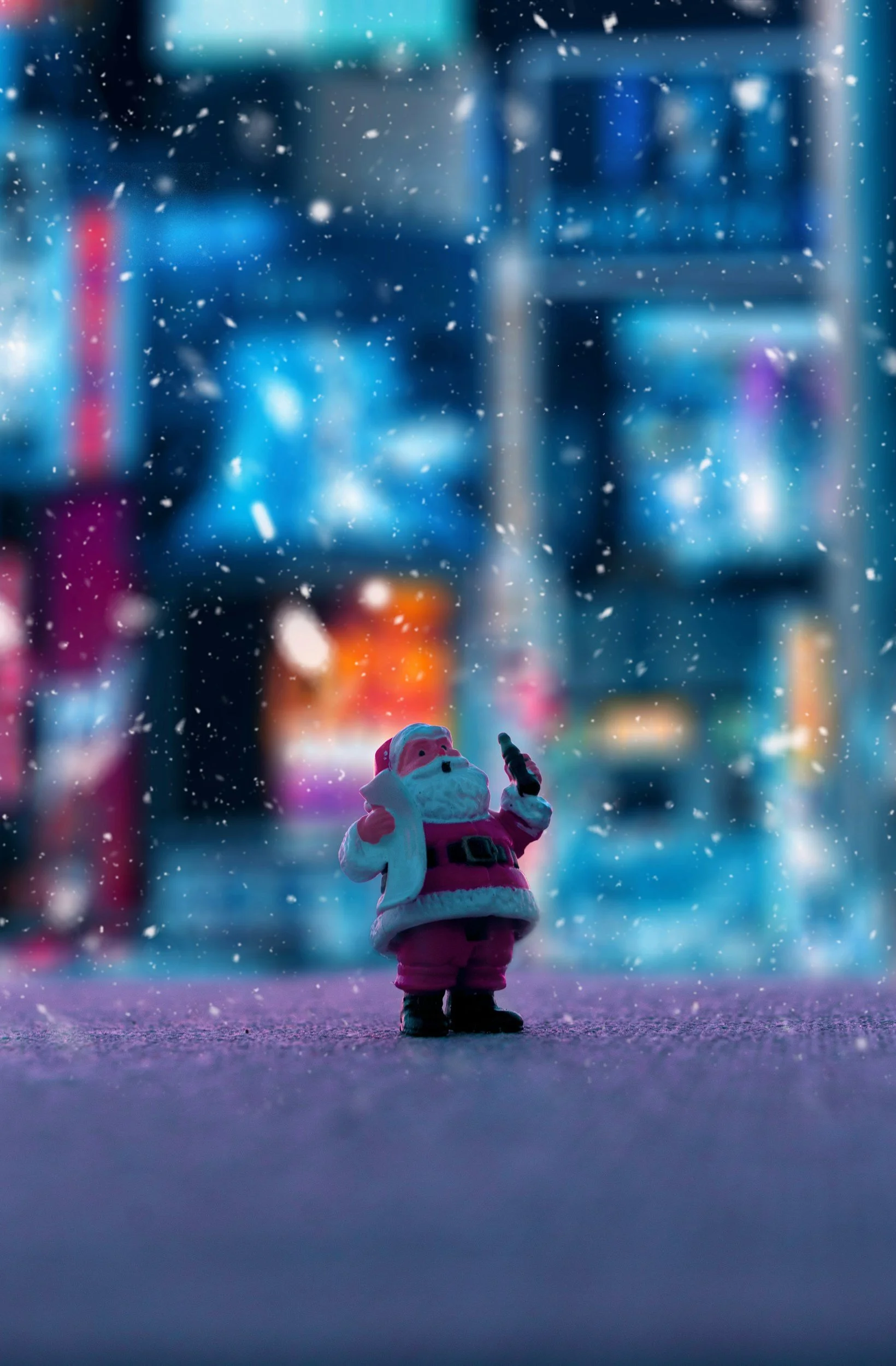
Santa Claus as a Yule Archetype
Rather than representing a single historical figure, Santa Claus reflects a convergence of older winter archetypes that predate Christianity. Across northern European traditions, midwinter was associated with elder gods, ancestral spirits, and liminal figures who moved between worlds during the darkest nights of the year. Santa’s mythology preserves these symbolic roots, blending pre-Christian solstice imagery with later Christian narratives rather than replacing them entirely.
Santa Claus intersects strongly with Yule through ancient winter mythology, particularly the Norse god Odin (Woden). Odin studied shamanism among the neighboring Saami, who happened to herd reindeer. During Yule, Odin was believed to lead the Wild Hunt, riding through the winter sky and rewarding or punishing households. Offerings left for Odin’s horse, Sleipnir, closely resemble the modern practice of leaving treats for Santa’s reindeer. Both figures share imagery of an elderly, bearded sky traveler associated with wisdom, magic, and liminal winter nights, reflecting the ancient Winter Father archetype.
Santa is also shaped by Saint Nicholas of Myra, a fourth-century Christian bishop known for secret gift-giving and protection of children. As Christianity spread through Pagan Europe, Saint Nicholas absorbed local Yule folklore, creating a syncretic figure that blended Christian charity with older solstice traditions rather than replacing them.
The symbolism of the hearth and chimney further links Santa to Yule. In folk belief, winter spirits and ancestors entered homes through the hearth during the solstice. Santa’s descent through the chimney mirrors this liminal passage, connecting him to household blessing, hearth magic, and the sacred Yule fire.
Santa’s reindeer reflect Arctic and shamanic symbolism of endurance, guidance, and spiritual travel, while his traditional red, white, and green colors align with Yule themes of vitality, liminality, and evergreen life. Together, these elements position Santa not as separate from Yule, but as a surviving cultural expression of ancient winter solstice mythology.
Yule Activities
Traditional-Inspired Yule Activities
Light a Yule Candle or Log
Light a candle or small log at sunset on the Winter Solstice to honor the sun’s return. Traditionally, embers were saved for protection and continuity; today, you can set intentions as you light the flame.Decorate with Evergreens
Bring pine, fir, cedar, or holly indoors to symbolize endurance and life through darkness. Even a single sprig or wreath carries this ancient meaning.Honor Ancestors
Set out a small plate of food, a candle, or photos to honor ancestors—reflecting old Yule customs of welcoming the dead during midwinter.Share a Solstice Feast
Prepare hearty, seasonal foods using stored or winter ingredients (root vegetables, grains, stews). Feasting was historically communal and magical, meant to ensure abundance in the coming year.Make a Yule Offering
Leave birdseed, bread, or grain outside for animals, echoing Nordic traditions of feeding birds and spirits to invite peace and blessings. Ensure the foods you leave out won’t harm local wildlife.
Contemporary Yule Practices
Intentional Rest Day
Take the solstice off from productivity. Yule is about stillness, not hustle. Rest is the ritual.Set Gentle Intentions (Not Resolutions)
Write intentions for the coming year as seeds rather than goals. Place them near a candle or evergreen to symbolize slow, steady growth. You can also place a vision board near the candle.Reflective Journaling or Tarot Pull
Journal or pull a single tarot card, asking: What is being reborn within me? Keep it simple and reflective.Create a Cozy Sacred Space
Arrange candles, blankets, and meaningful objects into a cozy corner or altar. Comfort is part of the magic. Make rest easier to attain by bringing comfort into your home.Practice Gratitude for What Sustained You
Make a short list of what carried you through the past year: people, habits, skills, or lessons. This mirrors ancient gratitude for stored harvests.
Family & Social Yule Activities
Storytelling or Folklore Night
Share myths of the sun, winter spirits, or ancestral stories—an old tradition easily adapted for modern families.Bake or Cook Together
Bake bread, cookies, or a Yule-inspired treat. Food preparation has always been central to solstice celebrations.Nature Walk at Dusk
Take a quiet walk at sunset on the solstice to observe the stillness of the season and mark the turning of the light.Create Handmade Gifts
Handmade gifts reflect older gift-giving customs tied to effort, care, and intention rather than excess. Thrifting and upcycling materials is also a great option for the wallet and the planet, and for repurposing loved items into new gifts, carrying the unique magic you created with love.Acts of Generosity
Donate, help a neighbor, or offer support to align with Yule’s themes of community care and survival through winter.
Get the Yule “Return of the Light” Tarot spread and journaling prompts on Substack.
Yule’s Magical Correspondence
The magical focus of Yule is about rest and intentional stillness. This energy empowers shadow work, honoring ancestors, planting long-term intentions, and trusting in the unseen growth just around the corner. Through this process, practitioners can cultivate self-compassion and discover renewed purpose, forming a deeper connection with themselves and their intentions. Embracing the quiet, reflective aspects of Yule fosters transformation and inner alignment, laying the foundation for future growth and resilience.
Herbs & Plants of Yule
Associated themes: protection, renewal, endurance, blessing, solar rebirth
Pine – longevity, purification, resilience, the return of light
Fir – spiritual elevation, hope, continuity
Cedar – protection, ancestral connection, sacred space
Holly – protection, masculine solar energy, guarding thresholds
Ivy – fidelity, endurance, life intertwined with death
Mistletoe – peace, fertility, reconciliation, sacred union
Bay (Laurel) – prophecy, wisdom, victory, clarity in darkness
Cinnamon – warmth, vitality, solar fire, abundance
Clove – protection, prosperity, warding off illness
Juniper – cleansing, banishing, spiritual protection
Frankincense – purification, prayer, divine connection
Myrrh – introspection, healing, honoring the dead
Animals of Yule
Associated themes: survival, rebirth, guidance, liminality
Stag / Deer – solar power, rebirth, strength, the Horned God
Boar – abundance, bravery, fertility, feasting traditions
Bear – hibernation, inner wisdom, rest before renewal
Wolf – protection, intuition, survival through darkness
Owl – wisdom, night vision, insight into the unseen
Raven – transformation, prophecy, ancestral messages
Reindeer – endurance, guidance, Arctic survival
Fox – adaptability, cleverness, navigating the dark
Symbols of Yule
Associated themes: light in darkness, cyclical time, protection
Yule Log – continuity, protection, solar rebirth
Evergreen Tree – immortality, resilience, life force
Sun Wheel / Solar Disk – turning of the year, rebirth of light
Candles – hope, guidance, returning sun
Wreath – the wheel of the year, eternal cycles
Bells – clearing stagnant energy, welcoming light
Horns – strength, fertility, primal life force
Stars – cosmic order, guidance, destiny
Seeds / Acorns – potential, future growth, patience
Crystals & Stones of Yule
Associated themes: illumination, grounding, protection, hope
Clear Quartz – light amplification, clarity, intention-setting
Sunstone – solar energy, joy, empowerment
Citrine – abundance, warmth, manifestation
Garnet – vitality, protection, life force during darkness
Bloodstone – endurance, strength, resilience
Obsidian – shadow work, protection, deep introspection
Smoky Quartz – grounding, release, transmutation
Tiger’s Eye – courage, balance, inner fire
Labradorite – magic, transformation, liminal awareness
Amber – preserved sunlight, healing, ancient wisdom
Key Takeaway…
Yule invites us to honor stillness as sacred, darkness as necessary, and patience as powerful. In choosing rest, reflection, and quiet intention, we align ourselves with the oldest rhythm known to humanity, the turning of the sun itself. Even now, in winter’s deepest hush, the light is returning. Vitality ebbs and flows, and hope is never truly lost.
References and Additional Reading
Adler, M. (2006). Drawing down the moon (Rev. ed.). Penguin Books.
Boeckmann, C. (2025, November 13). What is Yule? The ancient Yuletide tradition and the Yule log. The Old Farmer’s Almanac. https://www.almanac.com/content/what-yule-log-christmas-traditions
Burkert, W. (1985). Greek religion. Harvard University Press.
Ellis Davidson, H. R. (1990). Gods and myths of Northern Europe. Penguin Books.
Frazer, J. G. (1922). The golden bough (Abridged ed.). Macmillan.
Hutton, R. (1996). The stations of the sun: A history of the ritual year in Britain. Oxford University Press.
Hutton, R. (2001). The triumph of the moon: A history of modern pagan witchcraft. Oxford University Press.
Illes, J. (2007). Encyclopedia of witchcraft: The complete A-Z for the entire magical world. HarperElement.
Mark, J. J. (2018). Newgrange. World History Encyclopedia. https://www.worldhistory.org/Newgrange/
Ruggles, C. (2015). Ancient astronomy: An encyclopedia of cosmologies and myth. ABC-CLIO.
Simek, R. (2007). Dictionary of Northern mythology. D.S. Brewer.