
I Am Jane Doe: The Myth of the Perfect Victim
One case made headlines. The pattern behind it is much older.
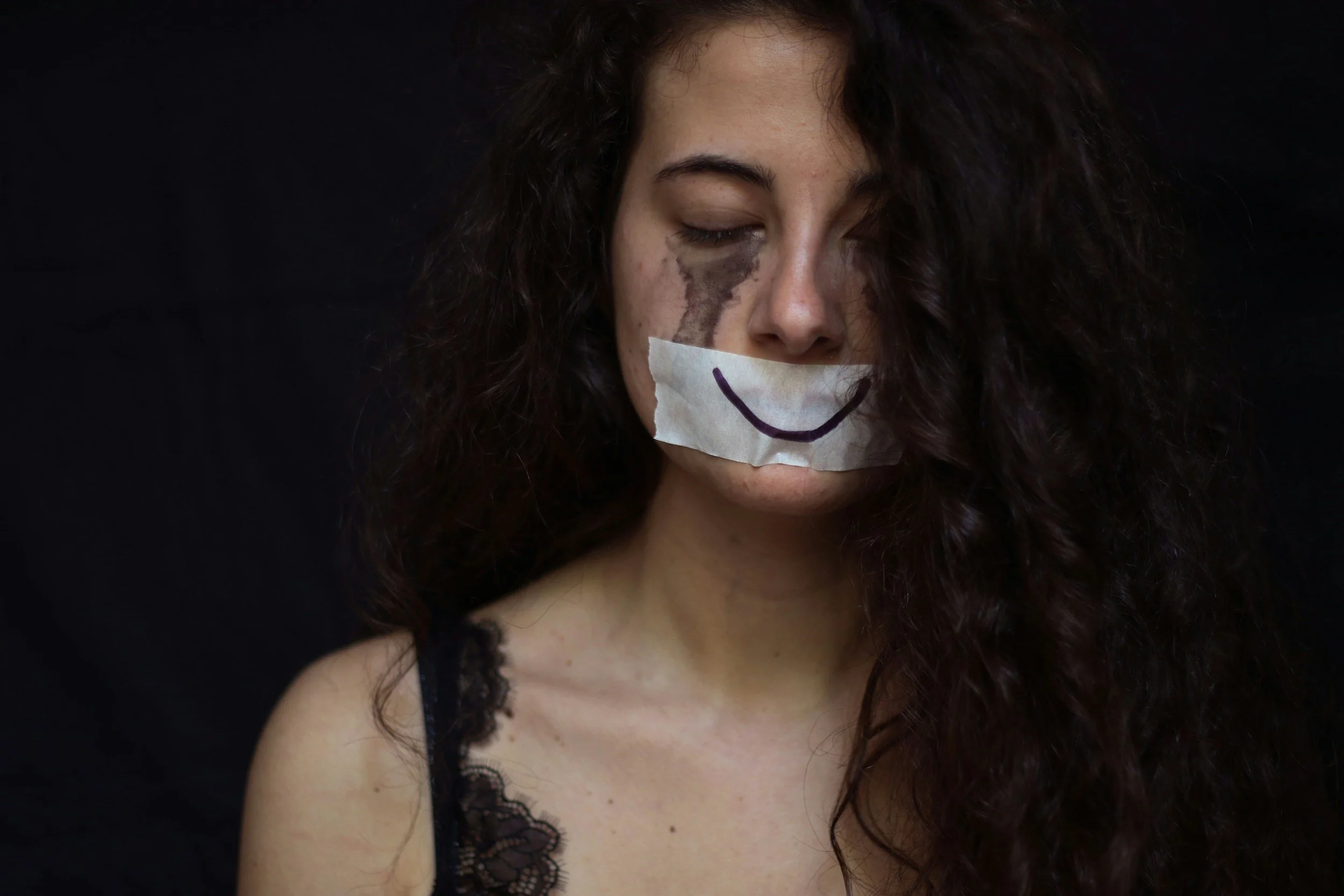
I am Jane Doe.
I first wrote those words in the fall of 2026, as allegations of sexual assault involving a Cornell University student were moving through the courts and across the news.
I did not know what happened inside that fraternity house. I still don't pretend to. That distinction matters. “I am Jane Doe” was never meant to declare a verdict in one particular case. It was a recognition of something much larger—something women have been describing, researchers have been studying, and cultures have been struggling to confront for generations.
I say I am Jane Doe because I am a woman.
And I know the arithmetic of being one.
According to the CDC's National Intimate Partner and Sexual Violence Survey, 54.3% of American women—more than half—reported experiencing contact sexual violence during their lifetimes. More than one in four, 26.8%, reported completed or attempted rape (Basile et al., 2022).
“Contact sexual violence” is a broad public-health category. It includes rape, sexual coercion, and unwanted sexual contact. Those experiences are not interchangeable, and we should not pretend they are. But neither should we look away from what the category reveals.
More than half.
Globally, the arithmetic is similarly devastating. The World Health Organization estimates that nearly one in three women and girls aged 15 or older—approximately 840 million people—have experienced physical or sexual intimate-partner violence, non-partner sexual violence, or both during their lifetimes (World Health Organization, 2025).
Those numbers are not fringe experiences. They are women you work with. Women you went to school with. Women sitting beside you at dinner. Your sisters. Your friends. Your daughters. Your mothers. Women who have never told you.
Research on sexual-assault disclosure has repeatedly found that many survivors do not seek formal support in the immediate aftermath of an assault. Some disclose weeks, months, or years later (Lanthier et al., 2018).
The reasons are not reducible to one neat psychological explanation. Fear can be part of it. Shame can be part of it. Anticipated reactions can be part of it. Relationships, social consequences, uncertainty, access to support, and institutional barriers can all shape whether—and when—someone speaks.
And when an accused person is buffered by wealth, status, institutional loyalty, or social power, seeking accountability can carry costs of its own. Sometimes surviving what happened is one burden. Convincing everyone else that it happened becomes another.
So when stories like Jane Doe's enter the public consciousness, many women aren't encountering some incomprehensible horror from another world.
We recognize the architecture. We recognize intoxication being treated as culpability instead of vulnerability. We recognize the interrogation of what she drank, what she took, where she went, whom she trusted, what she initially consented to, what she remembers, and what she doesn't.
We recognize how quickly the conversation can move from:
What happened to her?
to
What did she do?
There is a name for some of this in the scientific literature: rape myths—culturally persistent beliefs about sexual assault, perpetrators, and victims that can distort how allegations are interpreted.
Five decades of scholarship have examined how these beliefs shape interpretations of sexual assault and its victims (Trudeau & Carmi, 2026). Greater rape-myth acceptance is associated with greater victim-blaming, and research has also found associations with more defendant-favorable judgments in simulated sexual-assault cases (Bouillaut et al., 2026; Suarez & Gadalla, 2010).
We have studied the mythology.
And still, we repeat it.
Why was she drinking?
Perhaps because she was a college student at a party. Perhaps because she was an adult having a glass of wine on a date. Perhaps because human beings are allowed to become intoxicated without surrendering ownership of their bodies.
The expected consequence of drinking too much is a hangover. Sexual assault is not a consequence someone consents to by becoming intoxicated. Alcohol consumption and sexual consent are not synonyms.
Research on college sexual assault has specifically documented incapacitated rape alongside forcible rape. Incapacitation is not some obscure loophole invented after the fact but an established category within decades of sexual-violence research (Carey et al., 2015; Fedina et al., 2018; Kaysen et al., 2006; McCauley et al., 2009).
Why didn't she fight?
Because sometimes human bodies don't.
Research describes tonic immobility: an involuntary defensive response to overwhelming threat characterized by temporary motor inhibition. In one study of 298 women seeking emergency care following sexual assault, approximately 70% reported significant tonic immobility and nearly 48% reported extreme tonic immobility during the assault (Möller et al., 2017). Subsequent research and systematic review have further documented this response among sexual-assault survivors (de la Torre Laso, 2024; TeBockhorst et al., 2015).
Sometimes the nervous system fights. Sometimes it flees. And sometimes the body becomes terribly, involuntarily still. Absence of resistance is not evidence of consent.
Why didn't she report immediately?
Many survivors don't.
Delayed disclosure is sufficiently common that researchers have conducted systematic reviews specifically examining how healthcare professionals should respond when survivors disclose sexual assault weeks, months, or years afterward (Lanthier et al., 2018).
Delay tells us when someone disclosed. It is not, by itself, a verdict on what happened.
Why can't she remember everything? Why did some details change?
Here, science asks us to tolerate something harder than certainty: Nuance. Human memory is not a recording device.
At the same time, the popular claim that trauma necessarily creates fragmented memory goes further than the evidence allows. Researchers continue to debate precisely how traumatic experiences affect memory organization and recall (McNally, 2022; McNally et al., 2022).
Alcohol intoxication can interfere with memory encoding. Attention during overwhelming experiences can be uneven. Human memory itself is reconstructive. None of that proves an allegation. But neither does imperfect recall disprove one. That distinction matters.
Because somewhere along the way, we invented an impossible creature: the perfect victim.
The Perfect Victim
She must remember everything. She must report immediately. She must never contradict herself. She must fight, but not recklessly. She must drink—but never enough to become vulnerable.
She must trust people, but somehow know beforehand which ones are dangerous. She must have made every decision correctly before someone else violated her. Afterward, she must behave exactly as strangers imagine a traumatized woman should behave. She must be wounded enough to be credible but composed enough to be coherent. She must be angry, but never vindictive.
She must be sexual enough to be desirable, but never sexual enough for her sexuality to be used against her. Women can be sexual objects in someone else's story, but apparently not whole human beings with sexual agency of their own. She may be imperfect—but never in any way that can be used against her.
She must be pure—a “good girl.”
And finally, she must somehow prove that she deserved the bodily autonomy she possessed all along.
Meanwhile, the person accused of violating her is often permitted something she is not: Complexity.
None of this means abandoning due process.
It means refusing to confuse due process with cultural indifference.
Due process asks us not to determine guilt merely because an allegation has been made. It does not require us to pretend sexual violence is rare. It does not require us to ignore decades of research about victimization. It does not require us to treat intoxication as consent, immobility as permission, delayed disclosure as proof of fabrication, or imperfect human memory as a forensic recording device.
And the rest of us are entitled to ask why sexual violence remains so extraordinarily common that millions of women can encounter another woman's story and feel something inside themselves answer:
Me too.
Maybe not her exact story. Maybe not a fraternity. Maybe it was a boyfriend. A husband. A date. A friend. A coworker. A neighbor. A relative. A religious leader.
Maybe it was someone no one would suspect. Someone who kept going after we froze. Someone who interpreted silence as permission. Someone who took advantage when we were intoxicated. Someone who wore us down until acquiescence felt safer than continuing to resist. Someone we never reported because we already knew the questions that would come next.
For some survivors, the choice can feel less like justice or no justice than deciding which kind of survival they can endure: Trying to heal privately without accountability. Or seeking accountability while enduring doubt, scrutiny, gossip, disbelief, damaged relationships, professional consequences, and the public dissection of some of the worst hours of their lives.
And then come the questions.
What were you wearing?
How much did you drink?
Why did you go there?
Why didn't you leave?
Why didn't you fight?
Why didn't you report it sooner?
Why did you talk to him afterward?
Why can't you remember everything?
Different women. Different countries. Different decades. Different circumstances. The same questions.
At some point, the logic of victim-blaming collapses under its own weight. Children are sexually assaulted. Elderly people are sexually assaulted. Unconscious people are sexually assaulted. People dressed conservatively are sexually assaulted. People are assaulted by spouses and strangers, sober and intoxicated, at home and at parties. The variables change. The absence of consent does not.
Sexual assault is not seduction gone wrong. It is violence taking a sexual avenue.
That is why I am Jane Doe was always bigger than one lawsuit.
It was never a declaration that I knew what happened inside one fraternity house. It was never meant to substitute solidarity for evidence or compassion for due process. It was a recognition that sexual and gender-based violence is not an anomaly committed somewhere else, against some other kind of woman. It exists in universities and marriages. Workplaces and militaries. Churches and families. Parties, dates, and homes. It crosses class, race, nationality, religion, and politics.
And while people of every gender can experience sexual violence, population-level evidence documents a profound burden of sexual and gender-based violence among women and girls.
There are 840 million reasons this conversation cannot begin and end with whether one particular woman can prove herself worthy of being believed or worthy of compassion.
Every allegation deserves to be evaluated according to its own evidence. Every accused person deserves due process. And women deserve a world in which our safety and bodily autonomy do not become conditional upon our ability to perform victimhood correctly afterward.
I am Jane Doe because her story does not exist in isolation. Jane Doe is also more than one woman.
The name itself has long stood for the unidentified woman: the woman whose name we do not know, whose identity is protected, whose individual story disappears behind a legal placeholder.
In that sense, perhaps the phrase was always bigger than any one of us.
Science can give us prevalence estimates. It can document tonic immobility. It can study delayed disclosure. It can measure rape-myth acceptance. It can examine the imperfect machinery of human memory.
But behind every percentage is a person whose life cannot be reduced to a data point.
Statistics tell us the pattern exists.
Stories make us willing to see it.
And when one woman is made to stand beneath the unbearable weight of public scrutiny, solidarity does not require us to claim certainty about everything that happened to her.
It can mean something much simpler:
Refusing to make perfect victimhood the price of compassion.
Refusing to look away.
You are not standing there alone.
I am Jane Doe.
A Note on the Essay's Origin
This essay was originally written in October 2026 in response to public discussion surrounding sexual-assault allegations involving a Cornell University student identified as Jane Doe. The specific case was the catalyst for this essay, not its subject. The allegations were unresolved at the time of writing, and this essay does not make a determination about the guilt or innocence of any individual involved.
The research discussed here concerns population-level patterns in sexual violence, disclosure, trauma responses, memory, and rape-myth acceptance. Those findings can help us evaluate cultural assumptions about sexual assault; they cannot establish what occurred in any individual case.
References
Basile, K. C., Smith, S. G., Kresnow, M., Khatiwada, S., & Leemis, R. W. (2022). The National Intimate Partner and Sexual Violence Survey: 2016/2017 report on sexual violence. National Center for Injury Prevention and Control, Centers for Disease Control and Prevention.
Bouillaut, K., Hinton, W., Fitton, L., & Beazley, P. (2026). Rape myths and juror decision-making in sexual assault cases: An updated systematic review and meta-analysis. International Journal of Law, Crime and Justice, 86, 100887. https://doi.org/10.1016/j.ijlcj.2026.100887
Carey, K. B., Durney, S. E., Shepardson, R. L., & Carey, M. P. (2015). Incapacitated and forcible rape of college women: Prevalence across the first year. Journal of Adolescent Health, 56(6), 678–680. https://doi.org/10.1016/j.jadohealth.2015.02.018
de la Torre Laso, J. (2024). The reality of tonic immobility in victims of sexual violence: “I was paralyzed, I couldn't move.” Trauma, Violence, & Abuse, 25(2), 1630–1637. https://doi.org/10.1177/15248380231191232
Fedina, L., Holmes, J. L., & Backes, B. L. (2018). Campus sexual assault: A systematic review of prevalence research from 2000 to 2015. Trauma, Violence, & Abuse, 19(1), 76–93. https://doi.org/10.1177/1524838016631129
Kaysen, D., Neighbors, C., Martell, J., Fossos, N., & Larimer, M. E. (2006). Incapacitated rape and alcohol use: A prospective analysis. Addictive Behaviors, 31(10), 1820–1832. https://doi.org/10.1016/j.addbeh.2005.12.025
Lanthier, S., Du Mont, J., & Mason, R. (2018). Responding to delayed disclosure of sexual assault in health settings: A systematic review. Trauma, Violence, & Abuse, 19(3), 251–265. https://doi.org/10.1177/1524838016659484
McCauley, J., Ruggiero, K. J., Resnick, H. S., Conoscenti, L. M., & Kilpatrick, D. G. (2009). Forcible, drug-facilitated, and incapacitated rape in relation to substance use problems: Results from a national sample of college women. Addictive Behaviors, 34(5), 458–462. https://doi.org/10.1016/j.addbeh.2008.12.004
McNally, R. J. (2022). Are memories of sexual trauma fragmented? Memory, 30(1), 26–30. https://doi.org/10.1080/09658211.2020.1871023
McNally, R. J., Berntsen, D., Brewin, C. R., & Rubin, D. C. (2022). Are memories of sexual trauma fragmented? A post publication discussion among Richard J. McNally, Dorthe Berntsen, Chris R. Brewin and David C. Rubin. Memory, 30(5), 658–660. https://doi.org/10.1080/09658211.2022.2061135
Möller, A., Söndergaard, H. P., & Helström, L. (2017). Tonic immobility during sexual assault—A common reaction predicting post-traumatic stress disorder and severe depression. Acta Obstetricia et Gynecologica Scandinavica, 96(8), 932–938. https://doi.org/10.1111/aogs.13174
Suarez, E., & Gadalla, T. M. (2010). Stop blaming the victim: A meta-analysis on rape myths. Journal of Interpersonal Violence, 25(11), 2010–2035. https://doi.org/10.1177/0886260509354503
TeBockhorst, S. F., O'Halloran, M. S., & Nyline, B. N. (2015). Tonic immobility among survivors of sexual assault. Psychological Trauma: Theory, Research, Practice, and Policy, 7(2), 171–178. https://doi.org/10.1037/a0037953
Trudeau, E., & Carmi, R. (2026). Five decades of research on rape myths and victim interpretation. Behavioral Sciences & the Law, 44(4), 545–558. https://doi.org/10.1002/bsl.70060
World Health Organization. (2025). Violence against women prevalence estimates, 2023: Global, regional and national prevalence estimates for intimate partner violence against women and non-partner sexual violence against women.