
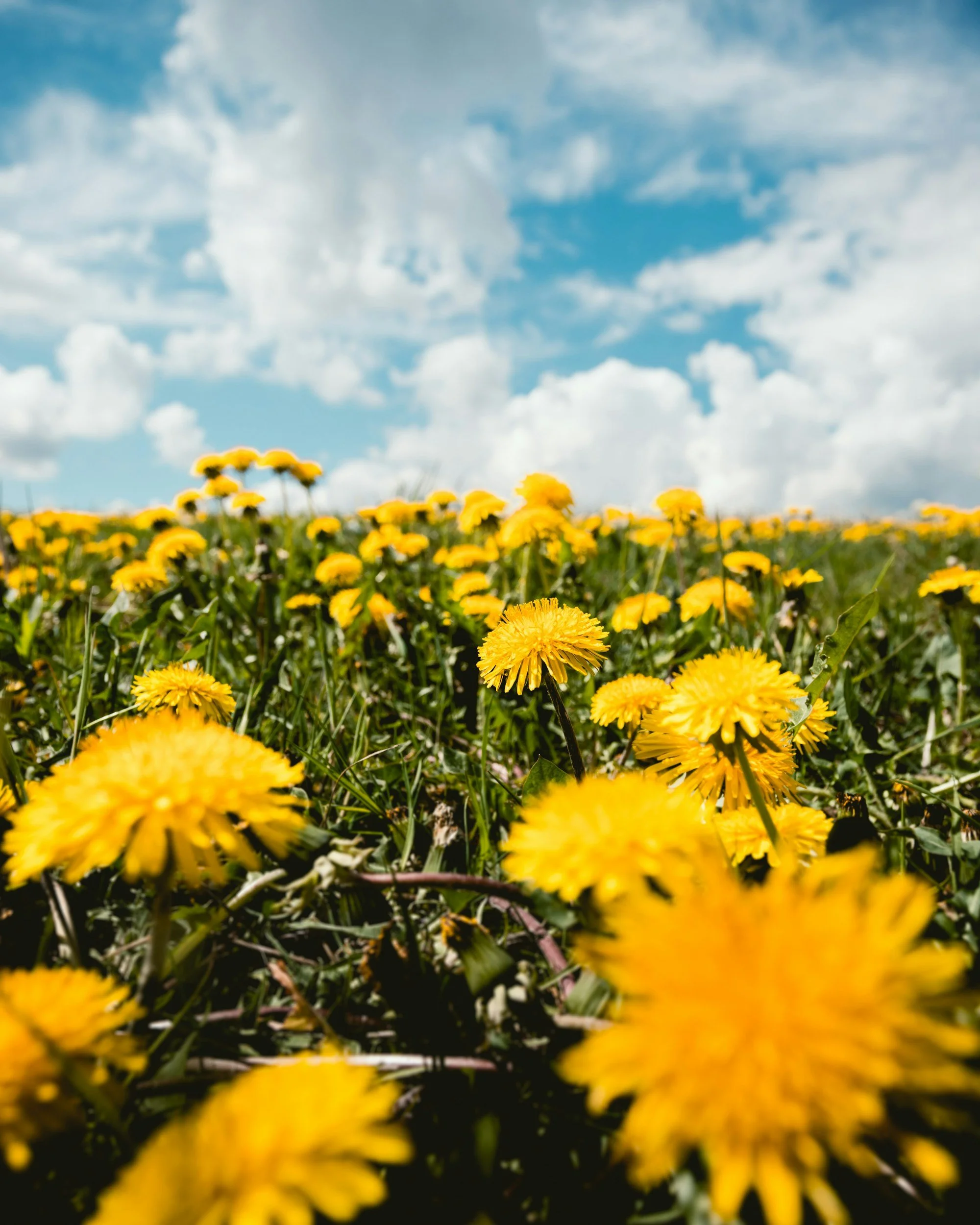
Dandelion: Folklore, Herbalism, Symbolism & Magick of Taraxacum officinale
There may be no plant more perfectly suited to the green witch than the humble dandelion.
We are taught to see it as a weed: something invasive, unruly, unwanted. It appears between sidewalk cracks, across manicured lawns, along roadsides, and anywhere else human beings have decided it doesn't belong. Pull it up and leave enough of its taproot behind, and it may simply return.
And yet, dandelion has fed people, appeared in traditional herbal practices, provided food for insects, entertained generations of children, and transformed itself from a little golden sun into a globe of seeds capable of traveling on the wind.
If that isn't witchy, I'm not sure what is.
Dandelion at a Glance
Scientific name: Taraxacum officinale
Plant family: Asteraceae (daisy family)
Common names: Dandelion, lion’s tooth, blowball
Plant type: Herbaceous perennial
Native range: Eurasia; now naturalized throughout much of the world
Parts used: Leaves, flowers, roots, and unopened flower buds
Flowering season: Primarily spring through fall, depending on climate
Habitat: Lawns, meadows, roadsides, disturbed soil, gardens, and other sunny spaces
Dandelion is one of those wonderfully ordinary plants that becomes more interesting the closer you look. Its familiar yellow “flower” is actually a flower head made up of many tiny florets, while its deep taproot helps the plant return even after being cut or disturbed. After flowering, those florets develop into the familiar globe of parachute-like seeds carried away by the wind.
Often dismissed as a lawn weed, dandelion has a long relationship with humans as both food and herbal medicine. Its leaves, flowers, and roots are all used in different culinary and traditional herbal preparations—making this stubborn little plant an especially fitting symbol of nourishment, resilience, transformation, and persistence.
THE STORYBOOK
Name, History & Folklore
The English word dandelion comes from the French dent-de-lion—"lion's tooth"—a reference to the jagged shape of the plant's leaves.
Its other folk names haven't always been quite so poetic.
Names associated with urination appear in European folk terminology, reflecting dandelion's long-standing reputation as a diuretic. Another familiar name, blowball, comes from the plant's spherical seed head and the childhood practice of blowing its seeds into the air.
And then there is the dandelion clock.
Generations of children have blown upon dandelion seed heads and counted how many breaths it takes to send the seeds away, imagining the number reveals the time. Other variations turn the dandelion into a tiny divinatory device: make a wish, blow, and watch what happens.
Whether or not a dandelion can actually deliver your wish is between you and the dandelion.
What is historically clear is that humans have had a much more complicated relationship with this plant than our modern obsession with pristine lawns might suggest. Dandelion has been eaten as a wild green and used in traditional herbal preparations for generations. Its leaves, roots, flowers, and buds have all found their way into kitchens and folk practices.
Today, many people encounter it primarily as a weed.
But "weed" isn't really a botanical category.
It is a judgment about where a plant is allowed to grow.
There is something rather Lilithian about that.
THE SCHOLAR
Herbalism & What the Evidence Actually Says
Dandelion occupies an interesting place between food, traditional herbal medicine, and modern supplement culture, and those categories shouldn't be treated as interchangeable.
Historically, preparations made from dandelion leaves and roots have been used for digestive complaints, appetite, and urinary purposes. European herbal monographs continue to recognize several of these applications specifically as traditional uses.
That wording matters.
Traditional use tells us something valuable about how humans have interacted with a plant over time. It does not, by itself, demonstrate that a treatment has been proven effective in modern clinical trials.
Modern laboratory research has explored dandelion extracts for properties including antioxidant and anti-inflammatory activity. But laboratory activity is not the same thing as demonstrating a meaningful health benefit in humans.
At present, human research on dandelion remains limited. The U.S. National Center for Complementary and Integrative Health notes that there is currently no compelling scientific evidence supporting dandelion as a treatment for any health condition.
That doesn't make centuries of herbal tradition meaningless.
It simply means we should be precise about what kind of knowledge we're discussing.
Food Before Medicine
Dandelion is also simply food.
The leaves can be eaten raw or cooked, particularly when young and tender. Their bitterness becomes stronger as they mature. Flowers can be incorporated into culinary preparations and beverages, while roots can be roasted and used to make a dark, bitter coffee-like drink.
That ordinary relationship with plants is sometimes lost in modern wellness culture. An herb doesn't have to cure something to be worth knowing.
Sometimes a plant can just be nutritious, bitter, beautiful, culturally interesting, and good to eat.
A Note on "Detox"
Dandelion is frequently marketed online as a liver detox or cleansing herb.
I would be cautious with that language.
Your liver and kidneys already perform the body's extraordinarily sophisticated work of processing and eliminating substances. Although dandelion has a history of herbal use and contains biologically active compounds that researchers continue to study, that is different from evidence that drinking dandelion tea "detoxifies" the liver.
Herbalism becomes more useful—not less magical—when we resist making a plant responsible for things the evidence hasn't established.
Herbal Safety
Eating dandelion in ordinary food amounts is generally considered likely safe for most people. Concentrated supplements and medicinal quantities deserve more caution.
Dandelion belongs to the Asteraceae family, alongside plants such as daisies, chrysanthemums, marigolds, and ragweed. People with sensitivities to related plants may need to use additional caution.
Potential interactions have also been proposed with medications including diuretics, anticoagulant or antiplatelet drugs, and diabetes medications. Safety information for medicinal amounts during pregnancy and breastfeeding is limited.
Certain dandelion-root preparations may also be inappropriate for people with particular biliary or gallbladder conditions.
If you're using herbs therapeutically—especially alongside prescription medication—it's worth treating them like biologically active substances rather than assuming "natural" automatically means harmless.
And if you're foraging: positively identify the plant, harvest only from areas you know have not been treated with herbicides or contaminated by roadside pollution or animal waste, and never consume a wild plant you aren't confident you've identified correctly.
THE WILD HAND
Dandelion in Witchcraft
This is where we move from what can be botanically or historically demonstrated into the symbolic language of contemporary witchcraft.
Magical correspondences aren't scientific properties hiding inside plants waiting to be measured. They are systems of symbolism developed through folklore, observation, tradition, personal practice, and the wonderfully human habit of finding meaning in the natural world.
Dandelion gives us plenty to work with.
Look at its life cycle.
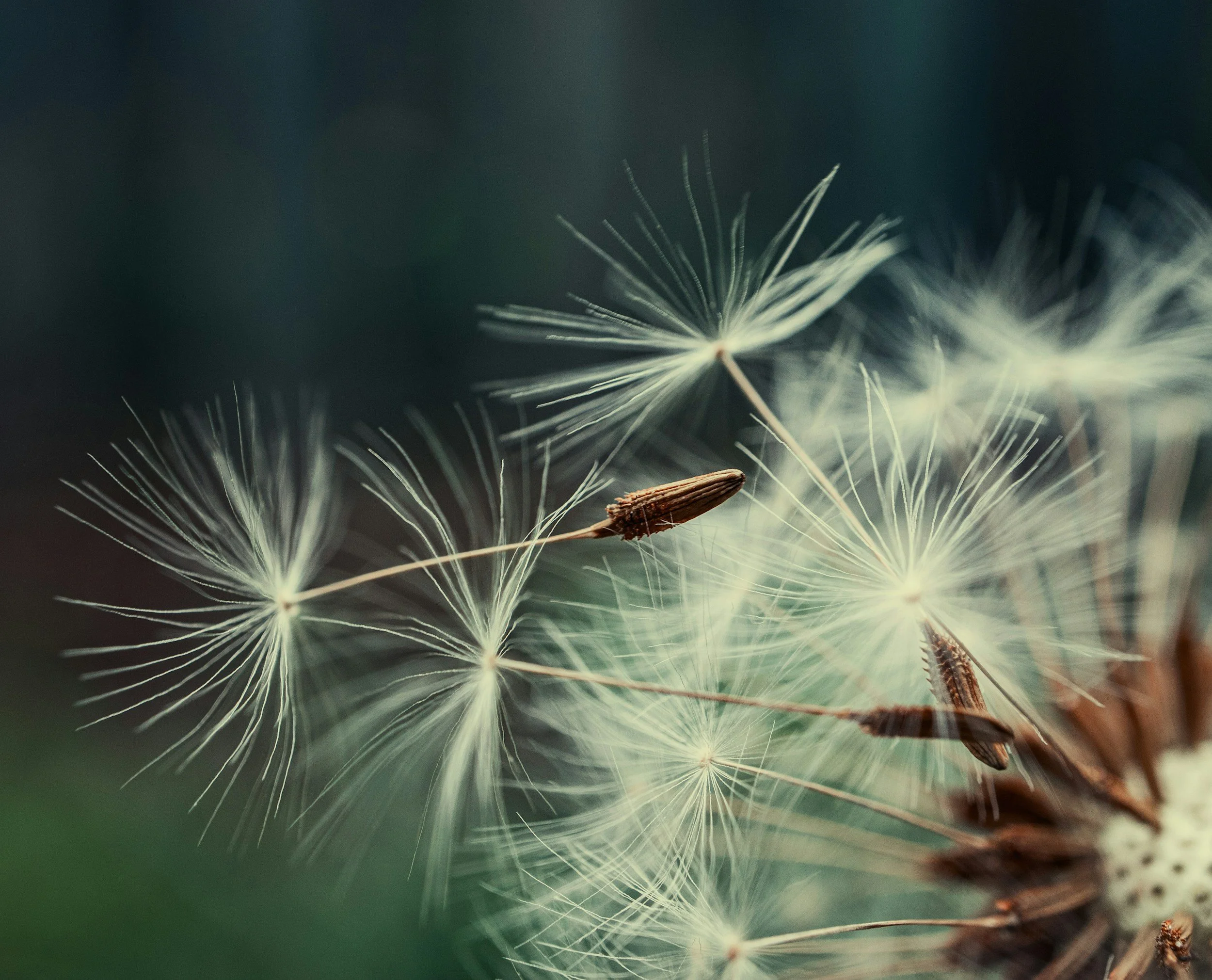
A yellow flower resembling a tiny sun becomes a pale sphere associated with wishes. The slightest breath sends hundreds of little parachutes into the unknown.
Its taproot anchors deeply into the earth.
Its seeds belong to the air.
It grows in places where nobody planted it.
It returns after people try to remove it.
It makes itself at home in disturbed ground.
For contemporary magical practice, that makes dandelion particularly evocative for work involving:
Resilience • Wishes • Transformation • Divination • Courage • Persistence • Freedom • Adaptability • Hope • Release • New beginnings
You may also choose to work with its different forms differently.
Flower — Solar Energy & Vitality
The golden flower naturally lends itself to solar symbolism: warmth, confidence, joy, visibility, vitality, and the return of light.
Use the flower in workings centered around courage, creativity, optimism, or allowing yourself to take up space.
Root — Grounding & Persistence
The taproot offers an entirely different metaphor.
Dandelion survives partly because it is difficult to remove completely. What appears above ground is only part of the plant.
The root can therefore make a meaningful symbol for ancestry, grounding, endurance, returning to yourself, and identifying what lies beneath the surface.
Seed Head — Wishes, Release & Divination
This is perhaps dandelion's most familiar magical form.
Hold the seed head.
Make your wish.
Take a breath.
Blow.
You don't need to believe the universe is contractually obligated to fulfill your request for the ritual to mean something.
The act itself can become a practice of naming desire and relinquishing control over exactly how it arrives.
That distinction has become increasingly important to my own understanding of magick.
Ritual does not have to eliminate uncertainty to be meaningful.
Sometimes ritual gives uncertainty somewhere to go.
Working With Dandelion
Wish Ritual
Write one intention on a small piece of paper.
Rather than writing exactly how it must happen, name the underlying thing you're calling toward: courage, belonging, opportunity, clarity, love, freedom.
Hold a dandelion seed head and read the intention aloud.
Then blow the seeds into the wind.
Keep the paper somewhere meaningful—or safely burn or compost it as a symbolic act of release.
The point isn't to command the future.
It's to clarify what you're willing to move toward while releasing the illusion that you can control every step between here and there.
Resilience Working
Place a dandelion flower, root, image, or pressed leaf on your altar.
Journal on:
Where have I survived in places I was told I didn't belong?
What part of me keeps returning?
Where am I confusing being unwanted with being unworthy?
What have I learned from disturbed ground?
This is where dandelion's symbolism becomes especially powerful.
Resilience isn't always beautiful.
Sometimes resilience looks like growing through concrete.
Dandelion Divination
The traditional childhood "clock" can easily become playful divination.
Ask a low-stakes question, blow the seed head, and observe.
Where do the seeds travel?
What remains?
Which direction catches your attention?
Rather than treating the result as an objective prediction, use it as a projective prompt—a small ritual for noticing your own reactions, hopes, fears, and intuition.
Sometimes the most interesting part of divination isn't what the oracle says.
It's what you secretly hoped it would say.
Dandelion Correspondences
Because magical correspondences vary among traditions and practitioners, consider these suggestions for contemporary practice rather than universal or ancient facts.
Element: Air for seed dispersal; Earth for the taproot; Fire/Sun as a useful personal association for the golden flower
Planetary symbolism: Sun or Jupiter may work symbolically depending on your tradition
Themes: Resilience, wishes, transformation, persistence, freedom, hope, divination, courage, release
Useful parts: Flower, leaf, root, seed head
Seasonal energy: Spring, renewal, return
Color symbolism: Yellow/gold, white
Ritual uses: Wishes, intention setting, resilience work, grounding, release, divination, solar workings
You don't need to inherit every correspondence from someone else's chart.
Pay attention to the plant itself.
What does it do?
Where does it grow?
How does it move?
What does it evoke in you?
That observation is one of the oldest foundations of plant magick.
The Weed at the Edge of the Garden
Perhaps my favorite thing about dandelion is that its symbolism doesn't require much invention.
We decided a beautiful, edible, persistent wildflower was undesirable because it interrupted the uniformity of our lawns.
And dandelion continued blooming anyway.
There are seasons of becoming that feel like that.
You may find yourself outside the carefully cultivated garden—outside the religion, family role, relationship, career, identity, or version of yourself you once believed you had to maintain.
There may be people who interpret your refusal to disappear as an inconvenience.
Grow anyway.
Put down roots.
Turn your face toward the sun.
And when the season changes, let the wind carry some version of you somewhere you have never been before.
Maybe that is the real lesson hidden inside the childhood wish:
Know what you want. Take a breath. And loosen your grip enough to let something move.
A Note From Letters to Lilith
Throughout this series, I distinguish between botanical/scientific evidence, historical or traditional herbal use, folklore, and contemporary magical practice whenever possible.
Plants can carry cultural, symbolic, spiritual, culinary, and medicinal significance without those categories needing to prove one another true.
Wonder doesn't require us to surrender discernment.
And discernment doesn't require us to surrender wonder.